
When it comes to buying a home or investing in property, most buyers focus only on price per square foot or location. But there’s one term that silently decides how much space you actually get, how crowded your building will be, and even your property’s future value—and that’s FSI (Floor Space Index).
Understanding FSI is not just for developers; it’s a must-know for every home buyer, especially in South Mumbai (SOBO) where premium locations, redevelopment projects, and TDR rules can make a huge difference.
In this guide, we’ll break down what FSI really means, its pros and cons, and answer the most common buyer questions, so you can make smart, informed property decisions.
FSI Meaning in Real Estate: A Buyer’s Guide for Smart Decisions
Source: Sobo Xpert
If you’re planning to buy a home, invest in property, or explore redevelopment opportunities in South Mumbai (SOBO), you’ve probably come across the term FSI.
But what does it really mean? And how does it affect your carpet area, price, and long-term value?
📌 What Is FSI in Real Estate?
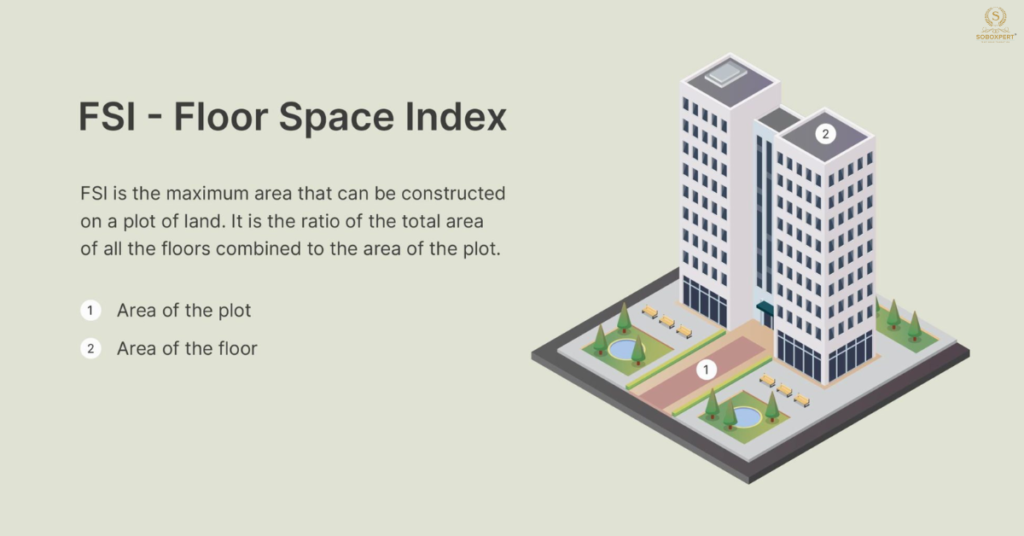
FSI (Floor Space Index), also called FAR (Floor Area Ratio), is the ratio of total construction allowed to the plot size.
Formula:
FSI = Total Built-Up Area ÷ Plot Area
Example:
- Plot size: 1,000 sq. m
- Allowed FSI: 2.0
- Maximum construction: 2,000 sq. m
This 2,000 sq. m could be:
- 2 floors × 1,000 sq. m
- OR 4 floors × 500 sq. m
Key takeaway: FSI controls density, building height, ventilation, and future redevelopment potential.
🏗️ Types of FSI Buyers Should Know
1️⃣ Base FSI – Standard FSI allowed under city regulations.
2️⃣ Premium FSI – Extra FSI developers can purchase (common in Mumbai).
3️⃣ TDR (Transfer of Development Rights) – FSI transferred from another plot, mostly used in redevelopment projects.
💡 Buyer Tip: Always ask, “Is this project using Base FSI, Premium FSI, or TDR?”
✅ Why FSI Matters for Home Buyers
Source: Sobo Xpert
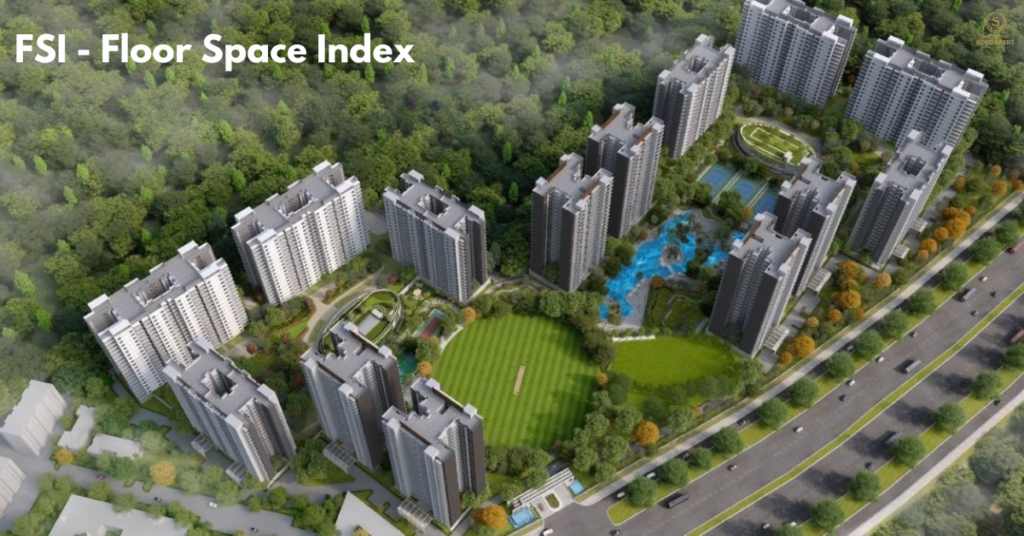
Many buyers focus on price per sq. ft., but FSI affects actual carpet area, livability, and resale value.
- Impacts of FSI on Buyers:
- Carpet area received 🛋️
- Density & crowding 🏢
- Natural light & airflow 🌬️
- Redevelopment potential 🔁
- Resale value 📈
💡 Remember: Higher FSI doesn’t always mean better living. It’s about balanced urban planning.
🌟 Pros of FSI in Real Estate
- Efficient Land Use 🌱 – Helps cities grow vertically without sprawling.
- More Housing Supply 🏘️ – Higher FSI can control property prices.
- Redevelopment Value 🔄 – Societies with unused FSI have higher future potential.
- Planned Infrastructure 🛣️ – Ensures better roads, open spaces, and amenities.
⚠️ Cons of FSI for Buyers
- Overcrowding Risk 🚶♂️ – High FSI can lead to congested communities.
- Smaller Flat Sizes 📏 – More floors sometimes reduce carpet area.
- Quality vs Quantity ⚖️ – More built-up doesn’t always mean better lifestyle.
- Buyer Confusion ❓ – Misunderstanding FSI vs carpet area vs built-up area.
💰 How FSI Impacts Property Prices
FSI directly affects land value, construction cost, and resale potential:
- Higher FSI land = higher plot price
- Premium FSI cost often adds to flat price
- Redevelopment projects with surplus FSI = better negotiation leverage
Pro Tip: Compare carpet area + FSI utilization, not just rate per sq. ft.
📏 FSI vs Carpet Area – What Buyers Must Know
| Aspect | FSI 🏗️ | Carpet Area 🛋️ |
| Controls | Total construction | Usable flat space |
| Decided by | Government | Developer |
| Buyer impact | Density & future value | Daily comfort |
🔑 How Smart Buyers Use FSI Knowledge
Source: Sobo Xpert
Understanding FSI helps buyers:
- Negotiate better 💬
- Avoid overcrowded buildings 🚫
- Maximize carpet area & value 🏡
- Make informed investment decisions 💰
📍 South Mumbai (SOBO) Buyers: Why FSI Matters
FSI is not just a technical term—it’s a buyer empowerment tool. By understanding FSI in real estate, you make smarter, safer, and more profitable property decisions in South Mumbai. FSI rules in SOBO are complex and location-specific. One wrong assumption can cost years of value.
💡 SOBO Xpert Tip: Consult a local expert to decode FSI, TDR, and redevelopment potential before signing any agreement.
Need personalized advice? Talk to a SOBO Xpert to get clarity on FSI, carpet area, TDR, and redevelopment potential. Make your next property investment confidently and safely.
Frequently Asked Questions
Q. What is a good FSI for residential projects?
Ans: Depends on the city. In Mumbai, FSI ranges from 1.33 to 5+, depending on location and zoning.
Q. Does higher FSI mean better investment?
Ans: Not always. Location, amenities, and demand are equally important.
Q. Can FSI increase in the future?
Ans: Yes. Government policy changes, metro lines, or redevelopment schemes can unlock additional FSI.
Q. Is FSI the same for all plots?
Ans: No. It depends on road width, plot size, zoning, and city rules.
Q. Should buyers care about unused FSI?
Ans: Absolutely! Unused FSI = redevelopment upside + long-term value.
About The Author
